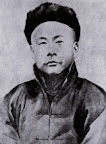
Grandmaster Huo YuanJia (1869 – 1910) was the founder of Chin Woo Athletic Association. He was the fourth child in the family of 10 brothers and sisters and was born in the Xiao Nan He village on the outskirts of Tianjin. His father, Huo EnDi, was a well-known martial artist who served as a bodyguard for caravans travelling to the Northeast. During his childhood, he suffered from yellow jaundice so his father refused to teach him, as it would be too risky in case he lost a fight and the family lost face. Instead, his father encouraged him to be a scholar, meanwhile instructing all his other healthier brothers in Wushu. Young Huo YuanJia was therefore forced to hide behind bushes, watching his father teach and he practised on his own for the next 10 years.
One day, a man who had received a beating from Huo EnDi when he was working as a guard, turned up to offer him a rematch. Huo EnDi was now fifty and had a rheumatic complaint and was unable to fight, so the eldest sons fought for him. All of them were beaten and the situation became very serious and rather embarrassing. As the challenger started to gloat, the "untrained" Huo YuanJia stepped up, gave him a sound thrashing and saved his family from losing face. His father was astonished at his son's skill and bravery, and from then on taught him everything he knew.
In 1901, there was a Russian wrestler in Tianjin who claimed to be the strongest man in the world. The wrestler had openly insulted the Chinese, calling them "Asian weaklings" because no one would accept his challenge to a fight. Huo YuanJia accepted the challenge but the wrestler forfeited the match, which was widely publicised by newspapers.
During that time, China was in a state of turmoil. It was the end of the Qing Dynasty and China was weak and politically confused. The country was suffering from one natural disaster after another on top of oppression. The Chinese people were regarded as invalids because of the miserable economic conditions. Many foreigners arrived and referred to the Chinese as the "Sick Men of Asia". Phrases such as 'No Dogs and Chinese Allowed' were widely used by the foreigners that were occupying territories in China by force.
Numerous foreign martial arts schools that arrived in China such as western boxing and Japanese martial arts made the situation worse. They challenged the various Wushu schools and defeated them in fights. This was not helped by the tradition among Wushu masters to teach their skills to a few students. These students may then pass their skills to one or two students. Wushu was therefore limited to a selected few. The skills would be lost if the selected ones did not pass their skills down to anyone. Hence, the standard of Wushu skills in China steadily deteriorated over the years.
In 1909, Hercules O'Brien, an American boxer of Irish descent was sent to Shanghai and was giving performances of his power. Along with demonstrating his strength, he would issue challenges of hand to hand combat to any Chinese willing to take him on, but in Shanghai no master was strong enough to beat him. Later, some Chinese people invited Master Huo to Shanghai to accept the challenge. O'Brien, however, fell victim to fear and left without competing. Thus, Huo YuanJia's fame has spread far and wide. Master Huo then challenged all the various foreign martial arts organisations. None were able to overcome his skills. He then felt that he must do more to restore the pride and morale of the nation. He believed that when the Chinese people are healthy, the whole nation would become strong again.
Master Huo started Chin Woo Physical Training School in Shanghai in 1909 to allow all Chinese the opportunity to learn Chinese martial arts and strengthen themselves in order to defend the country. He named his school "Chin Woo" - "Chin" meaning "high spirit" and "Woo" meaning "martial art". His objective was to provide the people of China with the essence of Chinese martial arts with the aim of cultivating knowledge, benevolence and courage and improving the health of the people, in addition to continuing the spread and preservation of Wushu skills.
As word of his victories spread, so did the Chin Woo spirit. Unfortunately, when Master Huo became ill, his opponents, all of whom had lost to him in fair fights, plotted to murder him. A Japanese doctor provided him some medicine with poison inside and Master Huo passed away on 9 August 1910. He was only 41 years old. Master Huo became a national hero and his name is still revered and honoured as a great martial artist fighter.
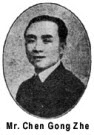
Undaunted by Master Huo's death, Mr. Chen GongZhe, Mr. Yao ChanBo and Mr. Lu WeiChang reopened the Chin Woo school. Master Huo’s younger brother, Mr. Huo YuanXiang, and his son, Mr. HuoTong Ker, continued to teach at the Chin Woo Association and later invited many famous martial-arts masters from Long Fist, Eagle Claw, Praying Mantis and other specialised schools to teach in Chin Woo. These include Liu ZhengSheng, Zhao HanJie, Zhao LianHe, Zhang FuQuan, Lee ZhengJiang, Ye FengKhi, Chen WeiXian, Sun ZhanXuan, Huo YuanQing, Lee ZhanFeng, Sun YuFeng, Huo DongGe, Zhao LianCheng, Zhao GuanYong, Ye ShuTian, Chen ZiZheng, Luo GuangYu, Lee YuTing, Liu ZhiXiang, Lee JianMing, Lee LianChun and Wu JianQuan.
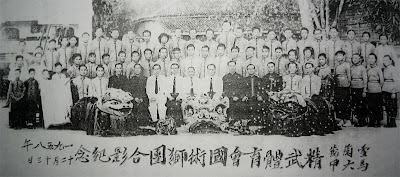
Therefore Chin Woo became a famous and popular martial-arts association in Shanghai. In 1915, the members bought a new building, reorganised the school and renamed it "The Chin Woo Athletic Association". Many provinces opened their own Chin Woo branches and in 1918 the Hong Kong Chin Woo Athletic Association was formed.
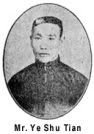
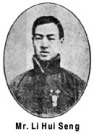
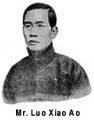
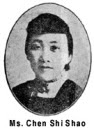
In July 1919, Shanghai Chin Woo Association sent five representatives to Southeast Asia to perform a missionary program to expand the Chin Woo activities overseas. They were Chen GongZhe, Li HuiSheng, Luo XiaoAo, Chen ShiZhao, and Ye ShuTian. They made their first stop in Saigon, Vietnam. There, they opened the first Chin Woo School and later more were established in parts of Malaysia and Singapore. To prove their skills, they were often required to give demonstrations or accept challenges. By 1923, these five Chin Woo Masters had opened Chin Woo schools all over Southeast Asia and visited nine different countries.
Currently Chin Woo is one of the largest Wushu organisations in the world with branches in China, Hong Kong, Malaysia, Singapore, Poland, Canada, UK, USA, Australia, New Zealand and Japan. The art and culture of Chinese martial arts is becoming more widespread everyday and valued relationships are growing between an ever increasing number of countries.
The Five Chin Woo Emissaries

 Posts
Posts



